Bong Won't Stop Smelling? Common Causes and How to Fix It | Namasteji
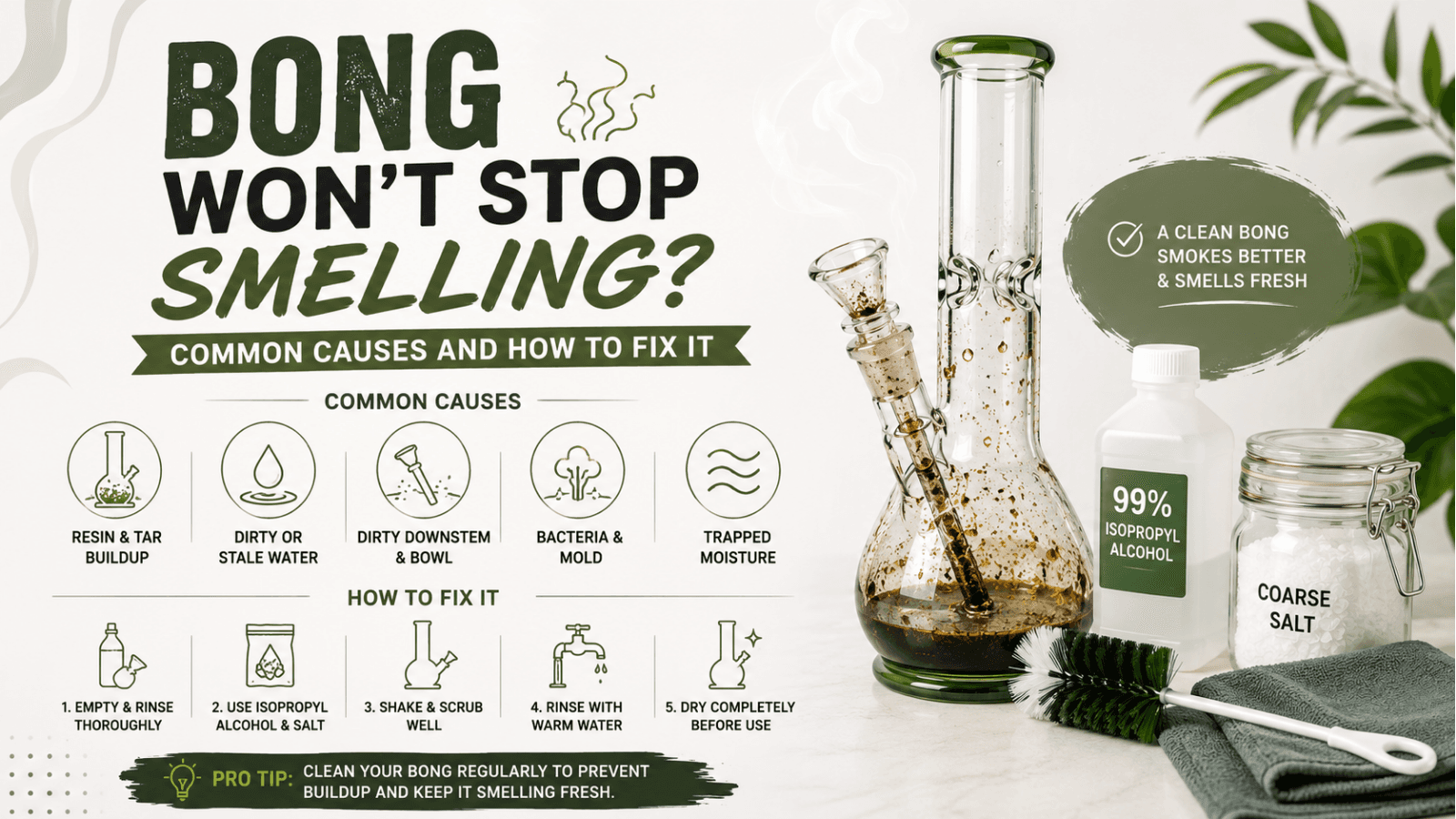
A bong that smells even after a quick rinse is one of the most common frustrations for owners - and the reason is almost always the same: a rinse with water moves loose debris, but it does nothing to the resin film that actually causes the smell. Here's what's really going on, and what clears it properly.
1. Stagnant Water Left Sitting Too Long
Water left in the base for days picks up a stale, musty smell of its own, completely separate from resin buildup. This is the single most common and easiest-to-fix cause.
The fix: change the water after every session, not just when it looks dirty. Fresh water should be the default, not the exception.
2. Resin Film Coating the Glass
Every session leaves a thin layer of resin on the inside of the glass - in the chamber, the neck, and especially around any percolator. This film builds up gradually and is the main source of lingering smell once water alone stops fixing the problem.
The fix: a proper clean using Glass Pipe Cleaning Solution combined with coarse salt, shaken through the chamber, breaks down resin far more effectively than water or dish soap alone.
3. Incomplete Drying Between Cleans
If a bong is rinsed but not properly dried before its next use, trapped moisture in tight spaces like percolators and joints can develop a mildew-like smell that's distinct from resin smell and noticeably harder to shift.
The fix: let the piece air-dry fully, upside down on a clean towel, after every deep clean - don't reassemble or store it while still damp inside.
4. Build-Up in Hard-to-Reach Percolators
Multi-chamber percolator bongs trap residue in places a simple shake-and-rinse can't reach, which is why two visually identical bongs - one with a percolator, one without - can need very different cleaning effort.
The fix: use a Flexible Percolator Cleaning Brush designed to reach into percolator arms, or a soak with cleaning solution that can work into tight gaps a brush can't reach.
5. Hard Water Mineral Deposits Trapping Residue
In hard water areas, mineral deposits can build up on the glass alongside resin, creating a slightly rough surface that holds onto smell even after a clean - smooth glass releases residue far more easily than a mineral-coated surface.
The fix: an occasional deeper soak removes both resin and mineral buildup together - worth doing every few weeks in hard water areas rather than relying on quick cleans alone.
Retail Insight: smell complaints from bong owners are rarely a product fault - they're almost always a cleaning routine issue. This is a genuine upsell opportunity: cleaning solution, coarse cleaning salt, and flexible brushes are low-cost, high-margin add-ons that solve a real, recurring customer problem.
A Simple Weekly Routine That Prevents Most Smell Issues
Change the water after every single session - not just when it looks visibly dirty.
Do a full clean weekly with isopropyl alcohol and Coarse Cleaning Salt, shaken through every chamber the piece has.
Dry fully, upside down, before the next use, especially around any percolator or joint.
Deep soak monthly in hard water areas to clear mineral buildup alongside resin.
For help choosing the right piece in the first place, see our guide: Glass vs Acrylic Bongs: Wholesale Buying Guide for UK Retailers. Browse the full wholesale bongs & pipes range.
Frequently Asked Questions - Bong Smell & Cleaning - User Guide
Q1: Why does my bong still smell after I rinse it with water?
Water alone only removes loose debris - it doesn't break down the resin film that actually causes most of the smell.
Resin builds up on the glass over repeated sessions and needs a proper cleaning solution, not just water, to fully clear.
Q2: How often should I clean my bong?
A full clean once a week is a good baseline for regular use, with a fresh water change after every session.
Letting resin build up for longer than a week makes it noticeably harder to clean later, so a consistent weekly routine prevents the problem from ever becoming severe.
Q3: What's the best way to clean a glass bong at home?
Isopropyl alcohol combined with coarse salt, shaken through the chamber, is the most effective home method.
The salt acts as a mild abrasive while the alcohol dissolves resin, together loosening buildup that water or dish soap alone won't fully remove.
Q4: Why does my bong smell musty even though I cleaned it?
This usually points to incomplete drying rather than incomplete cleaning.
Trapped moisture in tight spaces like percolators can develop a mildew-type smell that's different from resin smell, and it needs full air-drying to resolve rather than another clean.
Q5: Can I leave water in my bong overnight?
It's better to empty it after each session rather than leaving water sitting for extended periods.
Stagnant water develops its own stale smell fairly quickly, separate from any resin buildup, and is one of the simplest smell issues to avoid entirely.
Q6: Do percolator bongs smell worse than straight-tube bongs?
They can, simply because percolators trap residue in places that are harder to clean.
This doesn't make percolator bongs a worse choice - they offer a smoother experience - but they do need slightly more deliberate cleaning effort to stay smell-free.
Q7: Is it normal for a new bong to have a slight smell?
A very faint glass or packaging smell when new is normal and fades after the first couple of cleans.
A genuinely strong smell from a brand-new piece is unusual and worth checking with the retailer, but a faint initial smell on first use is nothing to worry about.
Q8: Will dish soap clean my bong properly?
Dish soap alone is far less effective on resin than isopropyl alcohol and salt.
Dish soap is designed for grease and food residue, not the sticky resin film that builds up inside a bong, which is why alcohol-based cleaning is the more reliable method.
Q9: How do I clean hard-to-reach percolator arms?
A flexible cleaning brush or a longer soak with cleaning solution reaches areas a straight brush or simple rinse can't.
Letting cleaning solution sit and work into tight spaces, rather than relying purely on scrubbing, tends to be more effective for intricate percolator designs.
Q10: Can hard water make my bong smell worse?
Yes - mineral deposits from hard water can build up alongside resin and make the glass harder to fully clean.
An occasional deeper soak helps clear both mineral deposits and resin together, which is particularly worth doing regularly if you live in a hard water area.
Frequently Asked Questions - For Retailers & Trade Buyers
Q1: Is bong smell a common reason for customer complaints?
Yes - it's one of the most frequent post-purchase questions retailers in this category receive.
Almost all of these complaints relate to cleaning routine rather than a product fault, which makes it a useful customer service talking point at the point of sale.
Q2: Should I sell cleaning products alongside bongs?
Yes - cleaning solution, coarse salt, and flexible brushes are natural, high-margin add-ons to any bong sale.
Positioning these products together at the point of sale increases basket value while genuinely solving a problem most new bong owners will encounter within weeks.
Q3: Do percolator bongs need a different cleaning product range than straight-tube bongs?
The same core products work for both, though flexible brushes are more relevant for percolator models.
Stocking a flexible brush alongside your percolator bong range gives customers exactly what they need for the trickier cleaning spots those designs create.
Q4: Can recommending a cleaning routine reduce bong returns?
Yes - customers who think a smelling piece is faulty are far less likely to return it once they understand it's a cleaning issue.
A brief explanation at the point of sale, or a printed care card in the bag, heads off a common source of post-purchase dissatisfaction before it becomes a return request.
Q5: What's the best-margin cleaning accessory to stock alongside bongs?
Cleaning solution and coarse cleaning salt are typically the strongest margin add-ons in this category.
Both are low-cost to stock relative to their retail price, and they pair naturally with every bong sale rather than being a separate, harder-to-sell line.
Q6: Should I mention water-changing habits to customers at the point of sale?
Yes - a simple reminder to change water after every session prevents the most common and avoidable smell complaint.
This is the single easiest piece of advice to pass on, and it resolves a meaningful share of smell-related questions before they ever come back to your shop.
Q7: Is there a seasonal pattern to bong cleaning product sales?
Cleaning product sales tend to track bong and pipe sales fairly closely, with a modest uptick when customers are cleaning pieces ahead of social occasions.
Keeping cleaning solution consistently in stock alongside your bong range, rather than treating it as a secondary line, captures this demand reliably.
Q8: Do hard water areas affect which products I should stock?
Retailers in hard water regions may find customers ask more often about deeper-clean solutions for mineral buildup.
Stocking a slightly stronger cleaning solution alongside the standard option gives customers in those areas a better-suited choice.
Q9: How should I display bong cleaning accessories in store?
Position them directly alongside or beneath your bong and pipe display rather than in a separate accessories aisle.
Customers are most likely to add a cleaning product to their basket at the same moment they're choosing a bong, so proximity at the point of sale matters more than category logic.
Q10: Where can I order bong cleaning accessories wholesale in the UK?
Namasteji supplies cleaning solutions and brushes alongside our full bongs & pipes range for UK trade buyers.
Ordering cleaning accessories from the same supplier as your bongs and pipes range simplifies stocking and ensures the products are sized correctly for the pieces you sell.


Related Posts