Nag Champa vs Sandalwood vs Lavender: Which Incense Is Right for You? | Namasteji
Nag Champa vs Sandalwood vs Lavender: Which Incense Is Right for You?
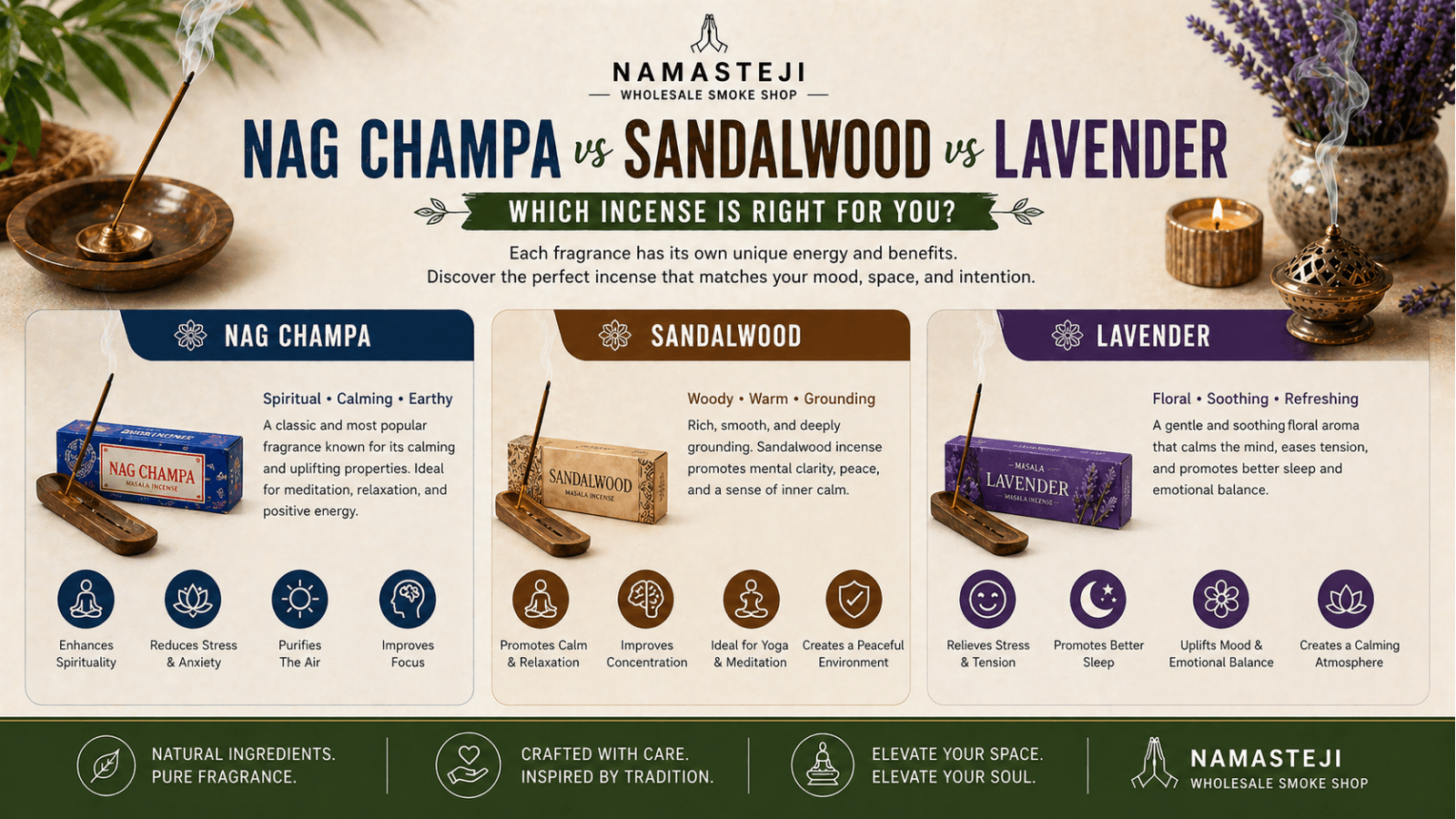
Nag Champa, sandalwood, and lavender are the three bestselling incense scents in the UK - and together they cover the three most common reasons people burn incense at home: creating a meditative atmosphere, grounding and focus, and relaxation and sleep. This guide breaks down each scent clearly so you can choose the right one for every occasion. Namasteji supplies UK smoke shops, gift shops, and Asian grocery stores with a full wholesale range of incense sticks and holders - including Satya, Nandita, Hem, Krishna, and Krishan.
The Three Most Popular Incense Scents in the UK
Nag Champa: The World's Most Famous Incense
Nag Champa is made from champaca flowers, nagkesar, sandalwood, and halmaddi resin. Satya Nag Champa Incense Sticks - produced in Bangalore, India - is the world's most recognised incense brand and a consistently top-selling SKU in UK retail. Its earthy, sweet, slightly musty character is unlike any synthetic fragrance and immediately recognisable.
What Does Nag Champa Smell Like?
Nag Champa is earthy and warm with a sweet floral note and a slightly resinous depth. It is grounding and contemplative - many people describe it as having an almost sacred or ceremonial quality. It is the scent most associated with yoga studios, meditation spaces, and spiritual shops worldwide.
When to Burn Nag Champa
Meditation and mindfulness - the most widely used meditation incense in the world; its grounding character helps quiet the mind
Yoga practice - widely burned in yoga studios; natural companion to any practice session
Home atmosphere - creates a distinctive, calming atmosphere in any room
Spiritual practice - used across Hindu, Buddhist, and New Age spiritual traditions
Scent Note: Nag Champa surprises people on first encounter - it does not smell like what most people expect from incense. The initial response is usually curious recognition; most people who try it once buy it again.
Sandalwood: The Warm Everyday Scent
Sandalwood comes from the fragrant heartwood of the Santalum album tree - one of the most prized aromatic materials in the world. Nandita Sandalwood Incense Sticks and Hem sandalwood are both widely available in UK shops. The scent is warm, creamy, and woody - rich without being heavy.
When to Burn Sandalwood
Daily home fragrance - warm and pleasant enough for everyday use without being intrusive
Focus and concentration - associated with mental clarity; popular in study and work spaces
Stress relief - the grounding character makes it one of the most recommended scents for stress management
Yoga and meditation - one of the most used scents in yoga studios alongside Nag Champa
Lavender: The Calming Sleep Scent
Lavender's calming properties are among the best-documented in aromatherapy. Satya Lavender Incense Sticks are the bestselling lavender incense in UK retail - fresh, floral, and lighter than Nag Champa or sandalwood.
When to Burn Lavender
Bedtime and sleep - one stick burned 30–60 minutes before sleep creates a calming atmosphere many users find genuinely improves sleep quality
Anxiety and stress - lavender's calming effect is immediate; effective for acute stress relief
Evening relaxation - lighter and more refreshing than sandalwood; ideal for quiet evenings winding down
Incense beginners - lavender's familiar, immediately pleasant fragrance makes it an excellent first incense
Which Should You Choose?
Meditation and spiritual practice: Nag Champa - specifically designed for this use
Daily home fragrance and focus: sandalwood - the most versatile everyday scent
Relaxation, sleep, anxiety: lavender - the most targeted calming option
First-time incense buyer: try all three - they represent three distinct fragrance profiles that will clearly show your preference
Practical Tip: Most regular incense users end up with all three: Nag Champa for meditation, sandalwood for working at home, lavender for evenings. Starting with these three covers all the bases.
Browse our full wholesale incense sticks & holders UK range at Namasteji.
Frequently Asked Questions - Incense Scents - User Guide
Q1: What does Nag Champa smell like?
Nag Champa is earthy, sweet, slightly floral, and resinous - deeply distinctive and grounding.
Q2: Is sandalwood incense good for sleep?
Sandalwood is calming and grounding but lavender is the more specifically recommended scent for sleep.
Q3: Which incense is best for anxiety?
Lavender and sandalwood are both strongly associated with anxiety relief; lavender is more immediately calming.
Q4: Can I burn incense every day?
Yes - burning incense daily is safe with adequate ventilation.
Q5: What incense is best for beginners?
Satya Nag Champa, Hem lavender, and Hem sandalwood are the three best starting points for incense beginners.
Q6: How do I burn incense sticks properly?
Light the tip, allow to flame for 10 seconds, then gently blow out - the stick will smoulder and produce fragrant smoke.
Q7: What is the difference between Satya Nag Champa and Super Hit?
Both are Satya products; Super Hit is sweeter and more floral while Nag Champa is earthier and more resinous.
Q8: Which incense brand is the highest quality?
Satya and Nandita are widely regarded as the highest-quality masala incense brands available in UK retail.
Q9: Where can I find sandalwood incense near me in the UK?
Sandalwood incense is widely available at smoke shops, Asian grocery stores, and gift shops across the UK.
Q10: Do I need a special holder for each type of incense?
A standard stick holder suits masala and charcoal incense sticks; resin incense requires a heat-resistant censer.
🏪 FOR RETAILERS & TRADE BUYERS - WHOLESALE UK
Why Scent Knowledge Drives Incense Sales for UK Retailers
The single biggest barrier to incense purchase for a customer standing in a shop is uncertainty about which scent to choose. Unlike a lighter or a grinder where the customer knows what they are buying, incense requires the customer to trust that the scent they pick will suit their home and their intended use. Retailers whose staff can offer a simple, confident scent recommendation convert significantly more incense browsers into incense buyers.
The three-scent framework in this guide - Nag Champa for meditation and atmosphere, sandalwood for daily use and grounding, lavender for relaxation and sleep - is a simple and extremely effective sales tool for any retail setting. Staff who can explain this framework clearly will consistently upsell single-pack incense buyers to multi-pack purchases covering all three scents.
Retail Insight: The most effective incense display gives customers enough information to make a confident choice without overwhelming them. Simple scent descriptions on shelf labels - "earthy, meditation", "warm, daily use", "calming, sleep" - dramatically increase conversion rates compared to shelves labelled only with scent names that customers may not recognise.
Building a Scent-Led Incense Display for UK Retail
Anchor with Nag Champa - position Satya Nag Champa as the central product; it is the most recognised incense product and acts as a credibility anchor for the whole display
Add sandalwood as the everyday option - Nandita or Hem sandalwood positioned as the daily home fragrance choice
Add lavender as the wellness option - Hem or Krishna lavender positioned as the relaxation and sleep scent
Expand with complementary scents - rose, frankincense, jasmine, and musk as additional options once the core three are established
Always cross-merchandise with holders - position wooden boat holders and stick holders directly adjacent to the incense sticks
Browse and order our full wholesale incense sticks & holders UK range at Namasteji.
Quick Summary for Retailers
Retailer Buying Guide
Range the three core scents as your minimum viable incense range: Satya Nag Champa, one sandalwood (Nandita or Hem), and one lavender (Hem or Krishna). These three cover the majority of incense demand across most UK retail formats. Add frankincense, rose, jasmine, and Super Hit as secondary scents once the core three are established. Always stock wooden stick holders alongside - minimum two holder styles (boat/flat tray and upright holder).
Browse our full wholesale incense sticks & holders range at Namasteji - all brands and scents available at competitive trade prices with fast UK delivery.
Browse our range: Wholesale Incense Sticks & Holders UK
Related guides: How to Choose the Right Incense for Your Home | Incense Holders Wholesale UK
Frequently Asked Questions - For Retailers & Trade Buyers
Q1: Which incense scent sells best across all UK retail formats?
Nag Champa (Satya) is the bestselling incense scent in most UK retail environments.
Q2: Should I stock all three scents or focus on one?
Stock all three - they serve different customer needs and purchase occasions.
Q3: How do I know which scents to introduce beyond the core three?
Frankincense, rose, jasmine, and musk are the strongest secondary scents for UK retail expansion.
Q4: Do scent preferences vary by retail format?
Yes - Asian grocery stores skew towards traditional scents; gift shops skew towards wellness scents.
Q5: Are multi-scent incense packs worth stocking?
Yes - variety packs are a strong introductory product and gifting option.
Q6: What is the best way to describe incense scents to customers who cannot smell them before buying?
Use simple mood associations: earthy/meditation, warm/daily, fresh/sleep - these communicate more than scent descriptors.
Q7: How should I price incense sticks in my shop?
Follow the market RRP for each brand tier and consider bundle pricing to increase average transaction value.
Q8: Should I offer incense tester sticks?
Tester sticks are an effective conversion tool if your shop format allows for ambient burning.
Q9: Are incense holders a high-margin product?
Yes - incense holders carry some of the strongest margin ratios in the accessories category.
Q10: How do I order wholesale incense by scent from Namasteji?
Browse and order by brand and scent at namasteji.co.uk.
Namasteji | namasteji.co.uk | B2B Wholesale Smoking Accessories UK


Related Posts